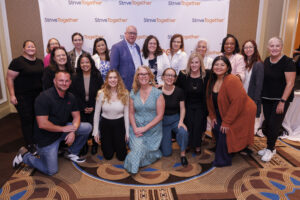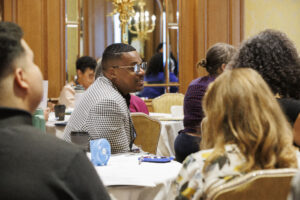

This fall, Promise Partnership Utah hosted a series of roundtable events in seven communities across the state to explore how community-based partnership initiatives put youth on a path to economic mobility. These events gathered key stakeholders from across sectors, including education and community partners, legislators, donors, civic leaders, and subject matter experts, to deepen understanding and spark conversations about aligning to support youth from birth to workforce entry.
Attendees at every event heard a presentation by Andrea Brandley, Senior Education Analyst at the Kem C. Gardner Policy Institute. Brandley shared insights from her recent report, which examines existing national and local models of community-based partnership initiatives and highlights the key features of effective partnerships.
“These initiatives focus on aligning existing efforts,” Brandley said. “How do we take existing resources and align them in such a way that they’re more accessible to kids and families to create a continuum of support from early childhood through career entry?” According to Brandley, Promise Partnership Utah already works in this space to “improve education and economic mobility for Utah youth.”
Conversations with National Partners and Local Leaders
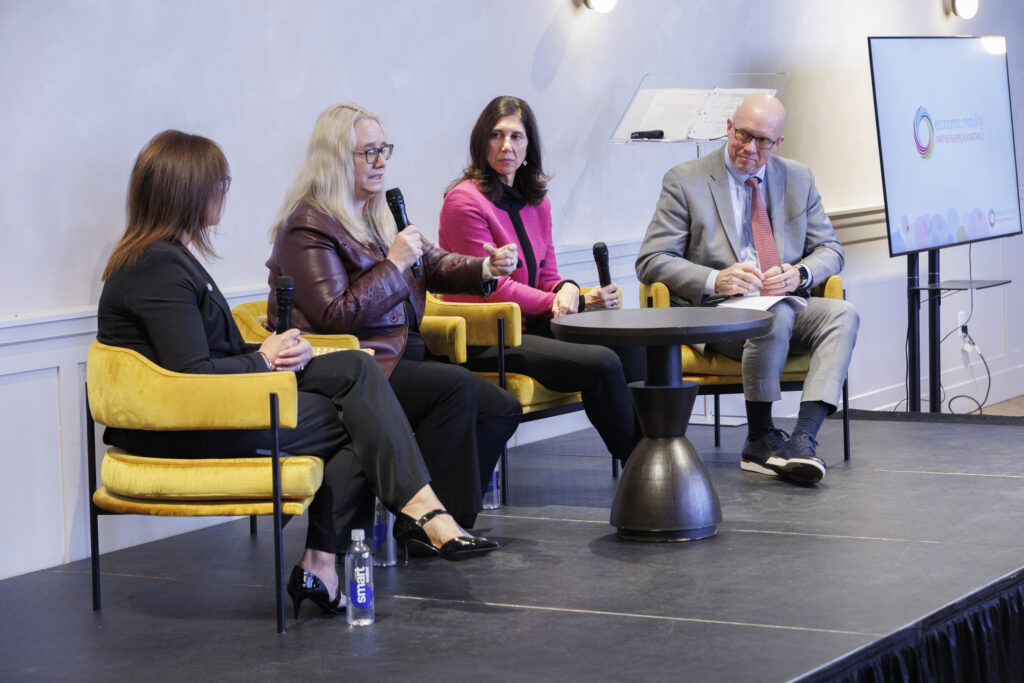
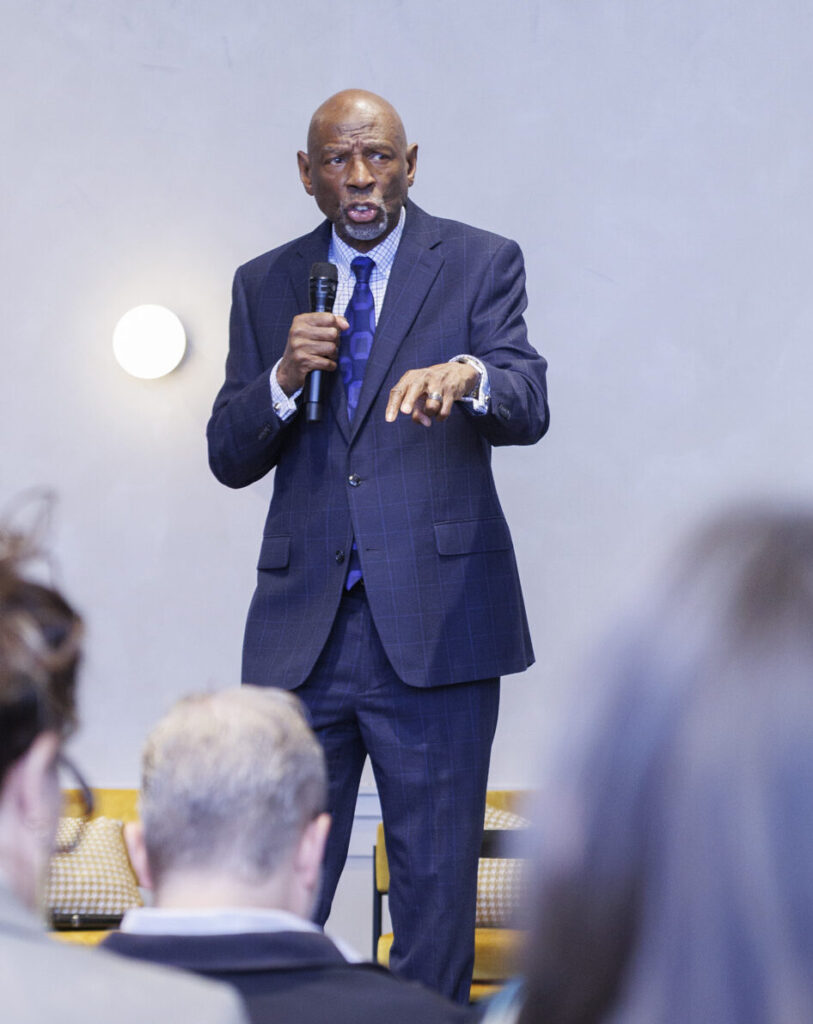
In addition to the Gardner Institute presentation, the roundtable events included presentations and discussions featuring national partners and local leaders. At the roundtable held in Salt Lake City, Geoffrey Canada, Founder and President of Harlem Children’s Zone and Founder of William Julius Wilson Institute at Harlem Children’s Zone, shared about his life’s work to break the cycle of intergenerational poverty in inner-city New York. Canada expressed confidence and excitement about the partnership work happening in Utah. “We go to see the best work in America, and I am telling you right here, in Utah, I’ve seen some of the best work in this country, which is why I’m such a fan of what’s going on, starting at Salt Lake and going into the rest of this state,” Canada said.
During the panel discussion at the Salt Lake City roundtable, Jennifer Blatz, President & CEO of national partner StriveTogether, highlighted the importance of partnerships for aligning communities, education, and other cross-sector partners around the same cradle-to-career outcomes. “Our role as place-based partnerships … is to be the aspirin, not the headache,” Blatz said. “Schools have enough headaches. And so how do you become the aspirin? How do you do whatever it takes to be able to support, fill in gaps, provide those cross-sector connections to support schools?”
Mayor of South Salt Lake, Cherie Wood, provided a Utah perspective. She also emphasized the importance of creating a comprehensive system of supports for youth from cradle to career through the Promise South Salt Lake initiative. “As a leader of my community, I feel it’s my work to go out and build these partnerships to make sure that we have these pathways built for our kids,” Wood said. “This work is so exciting and it is needed. Our kids need to know that we are advocating for them throughout their entire educational journey.”
South Salt Lake is one of the Promise Communities that make up Promise Partnership Utah and serves as a proof point for developing or expanding this work in other regions across the state.
Expanding Partnerships in Utah’s Rural Communities
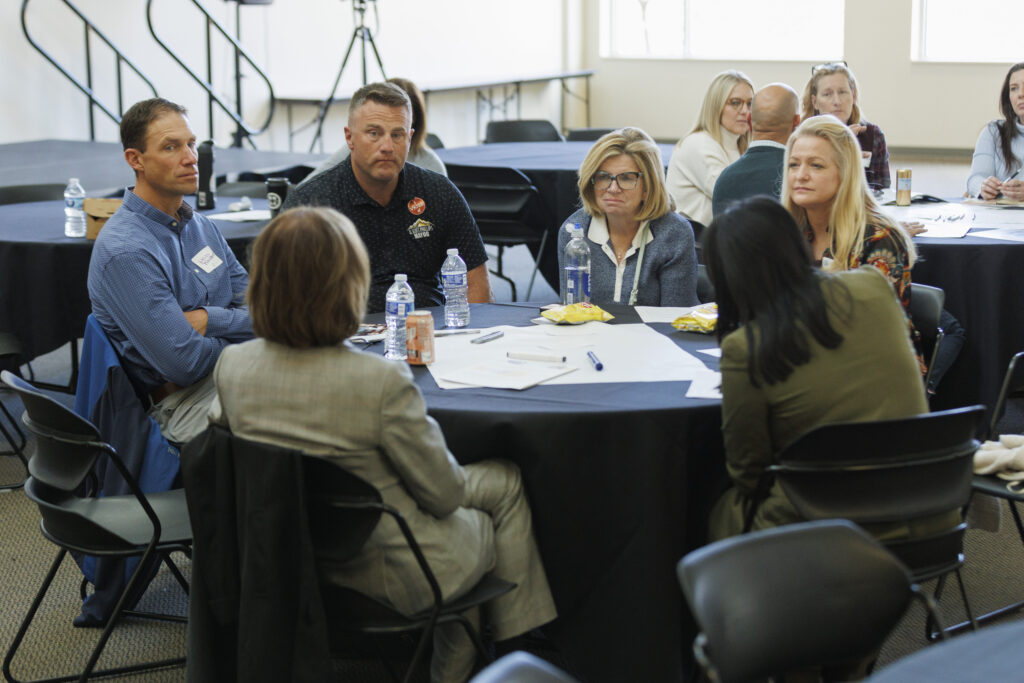
In addition to the roundtable event in Salt Lake City, Promise Partnership Utah co-hosted events in Heber City, Brigham City, Monticello, Moab, Price, and Richfield. These events were hosted in collaboration with many local partners, including United Ways of Utah, Northeastern Utah Educational Services, Southeastern Regional Development Agency, and R6 Regional Council.
Dreama Gentry, President and CEO of Partners for Rural Impact, traveled across the state with members of the Promise Partnership Utah backbone team to share her expertise in supporting economic mobility for kids in rural areas. “In rural places, the school is the heart of our work because often it is the heart of the community,” Gentry said. “The partnerships at that local level are rebuilding some of that sense of community and belonging, that we’re all in this together.”
Attendees engaged in discussions that provided valuable insights about their community’s unique challenges related to workforce development, housing stability, transportation, access to services, and more. They also shared their community’s unique strengths, such as strong community trust and a deep understanding of local history and context. Across all roundtables, participants expressed a strong interest in collaboration and increased alignment across sectors, as well as a need for statewide support to build capacity for this work.
Investing in Utah’s Youth
The Economic Mobility Partnerships Roundtables provided a better understanding of the potential for expanding this work in communities across Utah. As Geoffrey Canada stated, “There are answers. It’s going to call for folks to work collaboratively. It’s going to call for folks to put together real capital to solve this issue. And it’s gonna call for folks who are prepared to do this for the long term.”
This call for investment in community-based partnership work is already gaining traction in Utah. During the upcoming legislative session, state lawmakers will introduce the REACH Act, (Raising Expectations through Accountability, Community, and Hope), which supports community-based partnerships across the state. Governor Spencer J. Cox’s recent budget proposal for Fiscal Year 2027 also includes a recommendation for a $5 million investment in Promise Partnership Utah, stating, “Connecting community and education is essential for student success. Creating these partnerships and supporting collaboration will create better educational outcomes.” Although the final budget must be passed by the state legislature during the general session, the governor’s proposal presents an exciting opportunity to garner state-level support and demonstrates confidence in community-based work to improve education outcomes and economic mobility for Utah students.
Written by Jenna Fischer, Content Strategist
Thank you to Comcast for sponsoring the Economic Mobility Partnerships Roundtables. By supporting this work, they are demonstrating their commitment to advancing family prosperity, workforce growth, and opportunity.